· Diego Martínez Núñez · Trazabilidad · 3 min read
Food safety 2026: when traceability stops being talk and becomes infrastructure
The Food Tech published its 2026 food safety map: traceability, AI, transparency and resilience. The four converge on an uncomfortable conclusion: the time to speculate is over.

In recent days I read carefully the article published by The Food Tech titled “Seguridad alimentaria 2026: trazabilidad, IA, transparencia y resiliencia”. It is not just another article: it is a very good summary of where the global food industry is heading, and also a clear signal of something more uncomfortable: the time to speculate is over.
The article makes it clear that, looking toward 2026, food safety will be shaped by four unavoidable axes:
- deep traceability,
- artificial intelligence applied to prevention and control,
- real transparency toward the consumer,
- and operational resilience in the face of sanitary, climate and regulatory crises.
At Darwin Evolution we fully share this diagnosis. But there is something I think is important to add: this is not a future scenario. It is a present scenario, one that many organizations have not yet fully accepted.
Traceability: from technical requirement to strategic asset
The article points to something key: traceability is no longer enough just by existing; it must be fast, interoperable, auditable and actionable. Traceability designed only “to comply” when an audit arrives no longer works.
Today, markets, regulators and consumers (more and more so) demand:
- verifiable digital evidence,
- response capacity in minutes (not weeks),
- end-to-end visibility across the chain,
- and data that can be shared frictionlessly between actors.
At Darwin we work every day with producers, exporters, clusters and associations that are already feeling this pressure firsthand. That is why we designed our platform as infrastructure, not as accessory software.
AI and data: prevention before reaction
Another central point of the article is the role of artificial intelligence. We agree: AI does not come to “decorate” traceability, but to boost it.
But AI only works if there is reliable data behind it. Without well-captured, normalized and traceable data, no predictive model holds up.
Our vision at Darwin is clear:
evidence first, intelligence second.
That is why we integrate simple capture at origin, Critical Tracking Events (CTE), Key Data Elements (KDE) and models that detect deviations, risks and opportunities before they turn into problems.
Transparency: from storytelling to “story-proofing”
The article talks about transparency as a differential value. I would go a step further: transparency is no longer storytelling, it is story-proofing.
Telling a beautiful story about origin, sustainability or quality is no longer enough. You have to prove it with data, records and digital evidence.
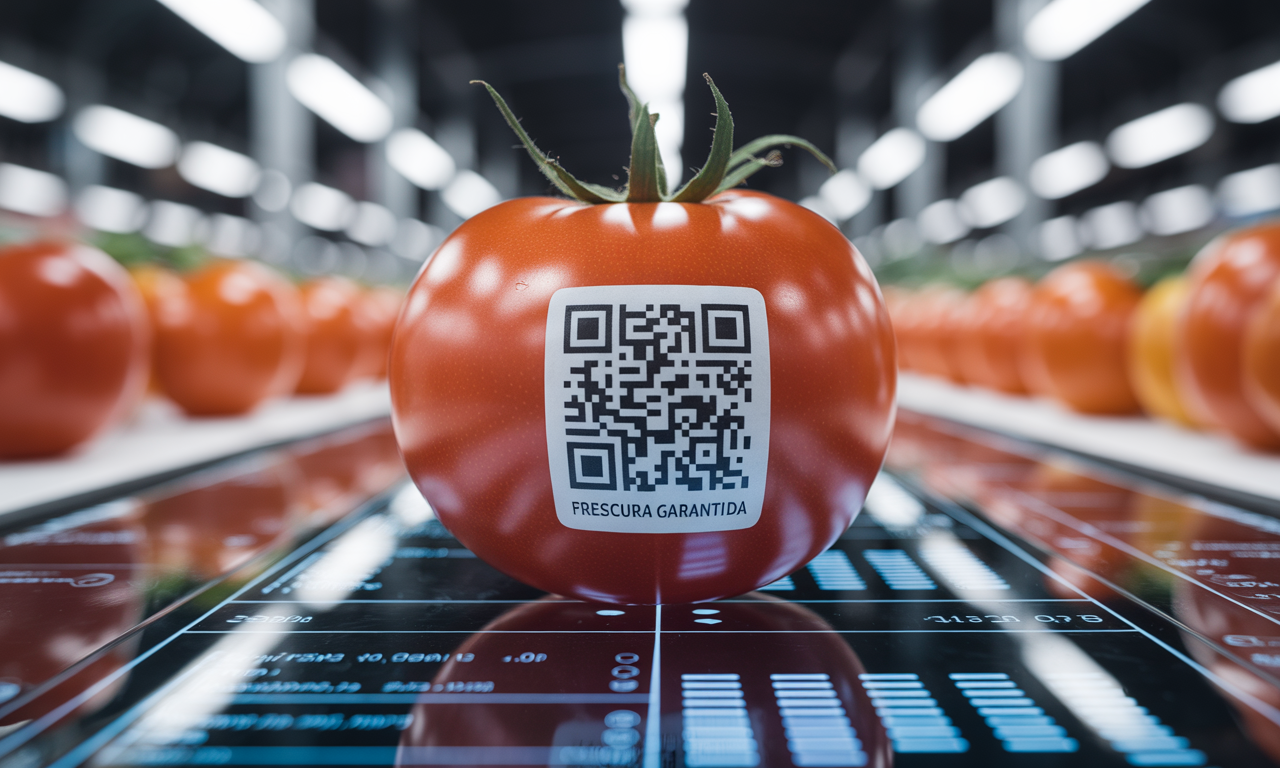
At Darwin we see how the QR on a product stops being marketing and becomes a digital passport where the following coexist:
- verifiable origin,
- production processes,
- certifications,
- and authentic narrative backed by data.
That is the new standard that is starting to consolidate.
Resilience: the real competitive differentiator
Finally, the concept of resilience runs through the entire article. And here lies, perhaps, the biggest market misunderstanding: resilience is not improvised when the crisis arrives.
It is built before, with:
- digitalized processes,
- integrated traceability,
- real-time visibility,
- and the ability to adapt quickly to new rules of the game.
The companies and sectors investing in this today are not doing it because of a technology trend. They are doing it because they understand that the next crisis is not a hypothesis, it is a certainty. The only thing that changes is when.
Our reading from Darwin
The Food Tech article describes the “what” very well. At Darwin Evolution we work every day on the “how”.
We are not talking about traceability as a future promise. We are implementing it today, across multiple Latin American food chains, turning compliance into real competitive advantage.
Because food safety in 2026 will not be built in PowerPoints. It will be built with digital infrastructure, evidence and decisions made now.
Diego Martínez Núñez CMO, Darwin Evolution